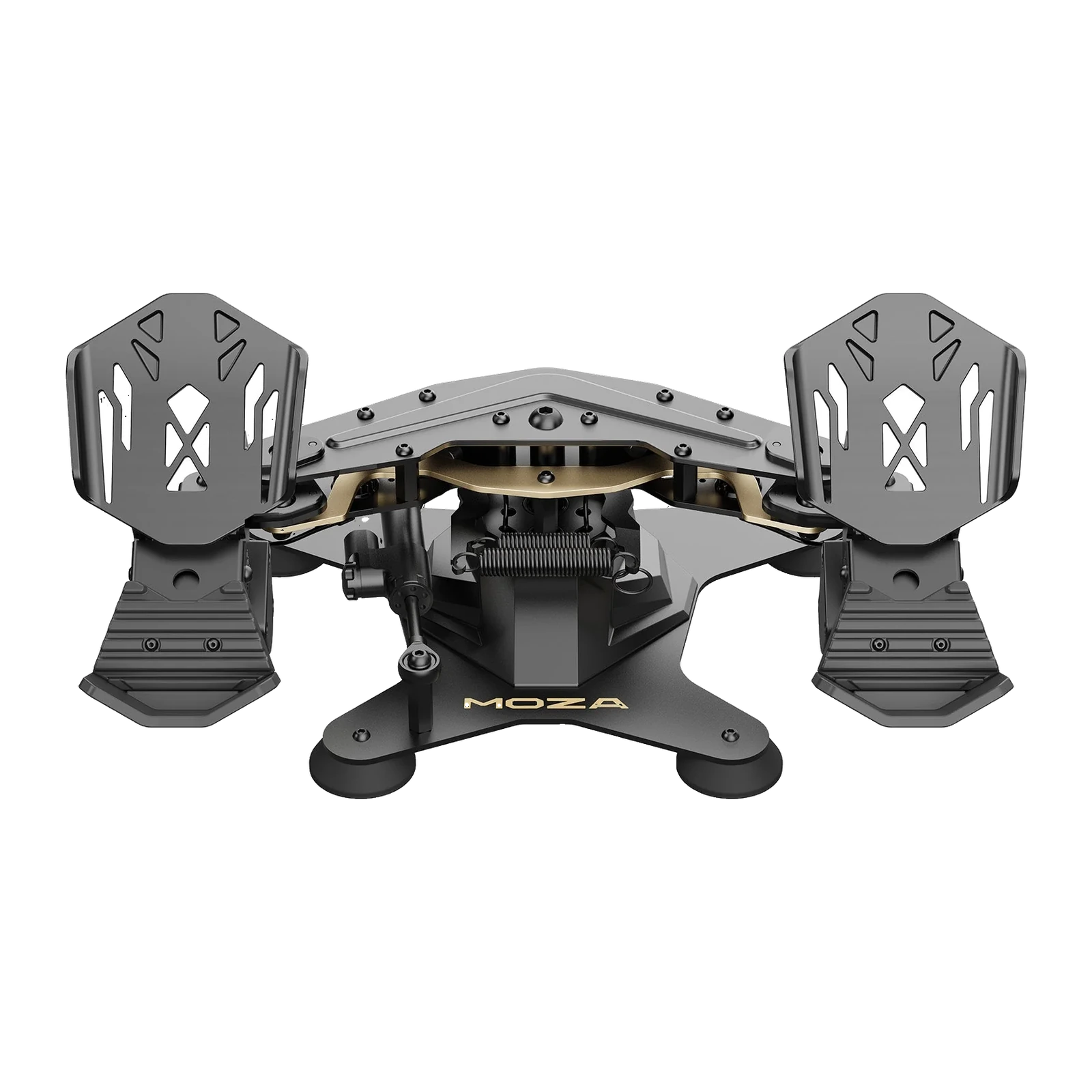
MOZA MRP Rudder Pedals — all-metal rudder pedals: ±30° travel, Hall sensors, 8 kg
Payment methodsAbout this product
All specifications →MOZA MRP Rudder Pedals: description and configuration
MOZA MRP Rudder Pedals.
The MOZA MRP Rudder Pedals are PC flight-sim rudder pedals built around an all-metal body and a swing-arm mechanism. The housing is aluminium alloy, the swing arm and pedal plates are high-strength steel, and the whole unit weighs 8.0 kg at 354 x 518 x 264 mm, so it stays put on the floor without a stand.
The mechanism gives ±30° of rotation, which works out to up to 150 mm of travel, with adjustable end stops you can tune per aircraft. Pedal tilt adjusts across a 0-30° range, the toe brakes have their own 0-20° travel, and both rudder and brake inputs are read by high-resolution Hall sensors — contactless, with no wearing potentiometers. Centring force is set with interchangeable springs, and the separate MOZA MRP Adjustable Damper adds a more viscous feel.
The pedals connect to MOZA flight bases over an RJ11 cable or straight to a computer over USB, so they work inside the MOZA ecosystem and equally well on their own. MOZA lists the major PC simulators as compatible, including Microsoft Flight Simulator and X-Plane. Four rubber pads hold the unit on the floor, while profile-compatible mounting holes let you bolt the pedals rigidly into a cockpit.
Metal instead of plastic
The MRP housing is aluminium alloy, while the swing arm and pedal plates are high-strength steel. The unit weighs 8.0 kg, so a sharp rudder input does not push the pedals forward or let them flex underfoot, and four rubber pads keep them in place on a smooth floor. MOZA describes the angular silhouette as a nod to stealth aircraft.
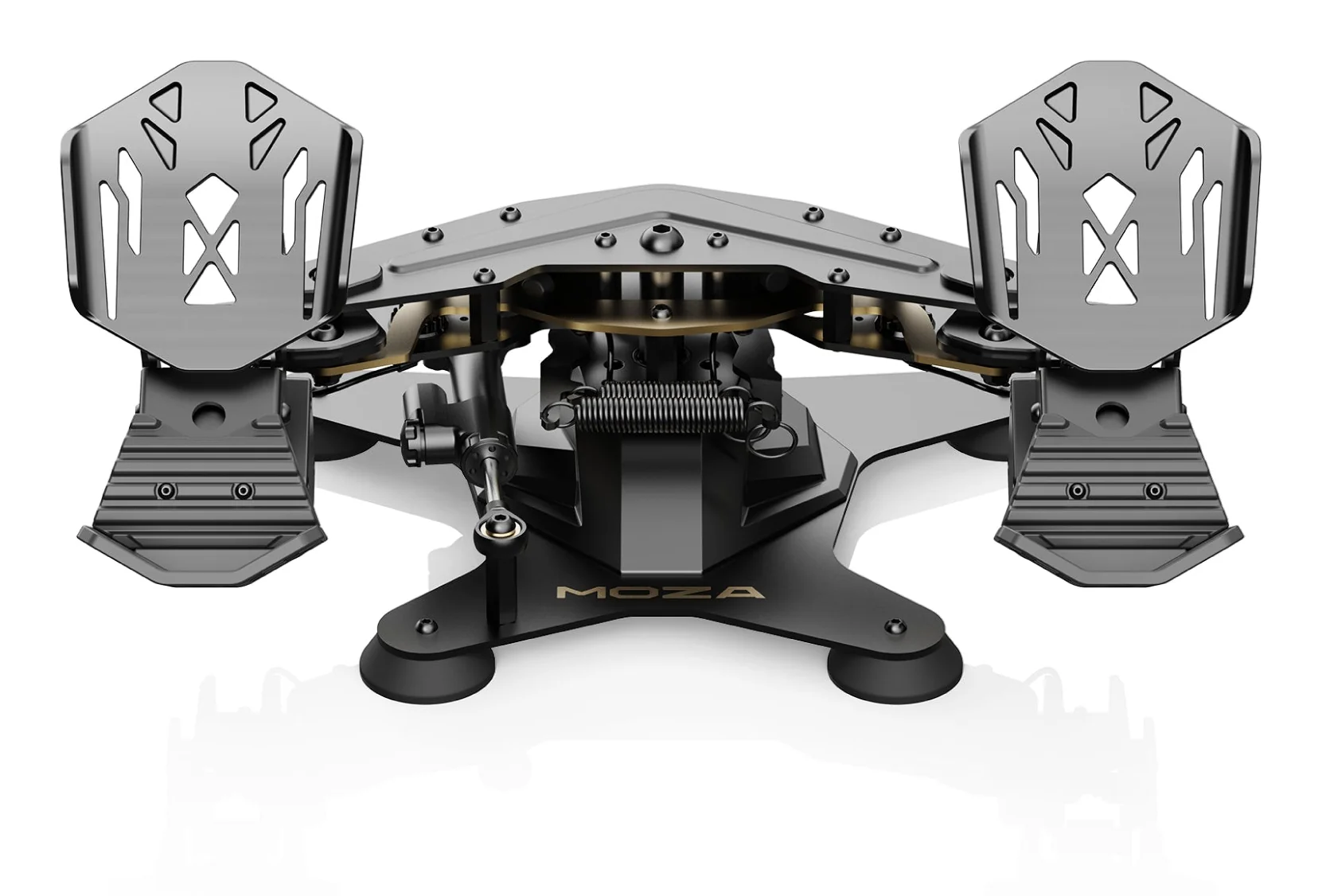
The stealth-inspired angular silhouette of the MOZA MRP pedals on a light background
Swing-arm mechanism: ±30° and 150 mm
Instead of guide rails there is a swing arm: ±30° of rotation turns into up to 150 mm of travel, and the motion stays linear across the whole range. The end stops are adjustable, so you can narrow the range to suit the aircraft — short and precise for a fighter, full sweep for a heavy airliner.
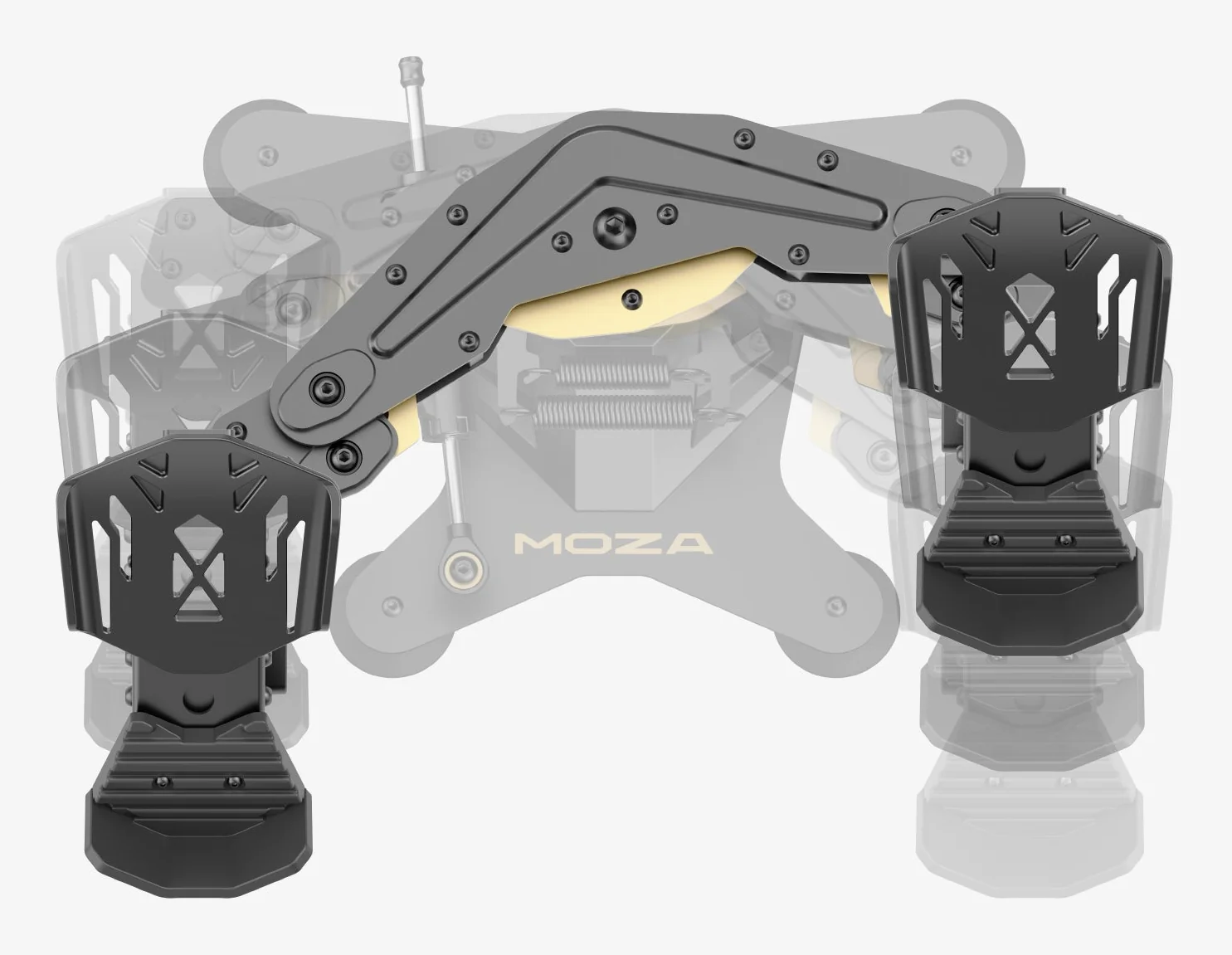
The MOZA MRP swing-arm mechanism highlighted against a ghosted view of the pedal body
Set up around your seating
Pedal tilt is stepless across a 0-30° range, so the pedals suit a low racing seat and an upright desk position equally. The heel rest is removable: some pilots plant the whole foot, others ride on the toes alone. Note that MOZA's own page describes the tilt range as ±25° while the spec table states 0-30°; worth confirming with the manager if the exact angle matters to you.
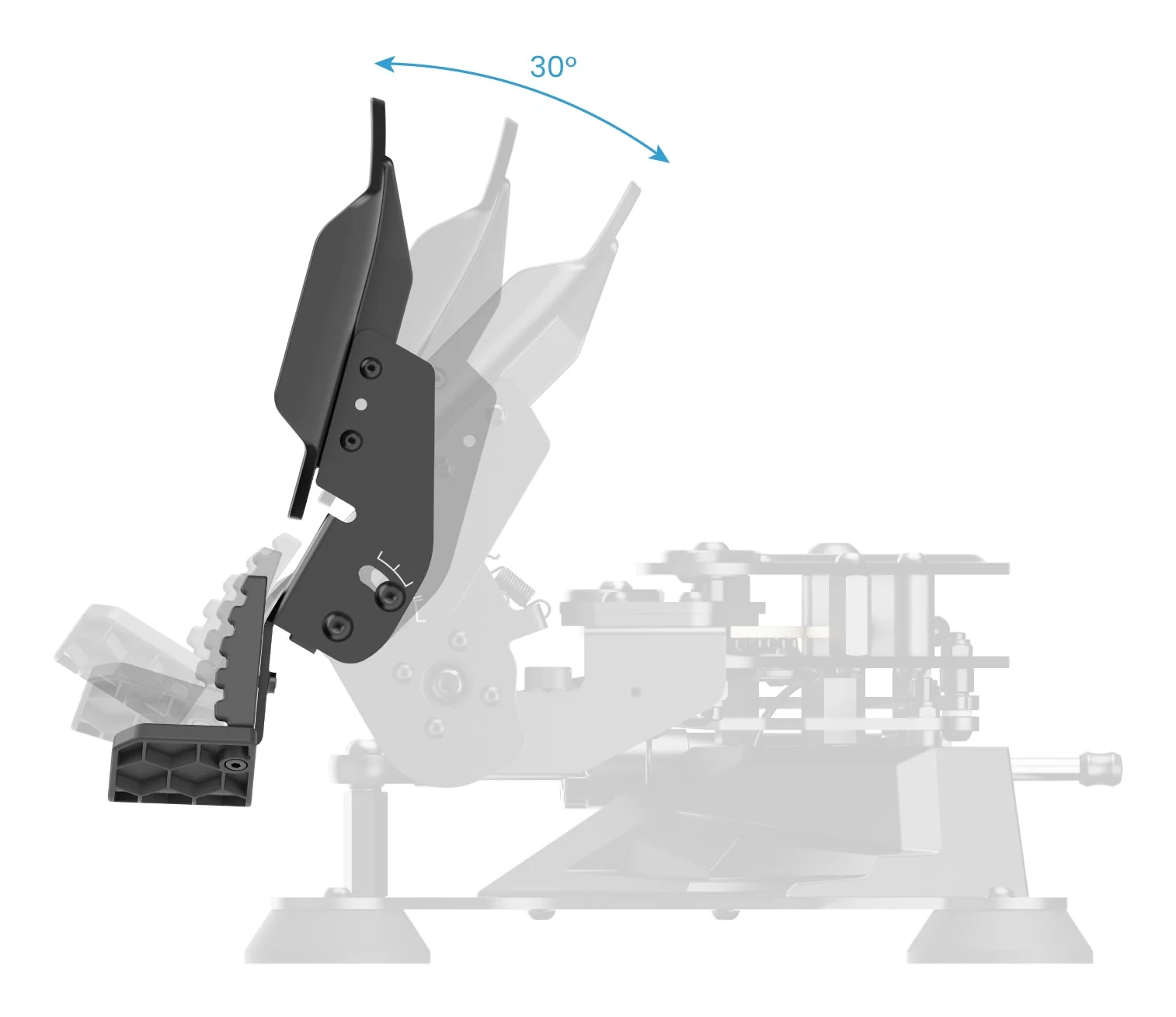
Diagram of MOZA MRP pedal tilt adjustment marked 30 degrees
Brakes and Hall sensors
The toe brakes have their own 0-20° travel and run on high-resolution Hall sensors — contactless, with no potentiometer track to wear. The same sensor type reads the rudder axis. The result is a smooth build-up of braking during taxi, measured braking on the roll-out, and an axis that does not develop noise over time.
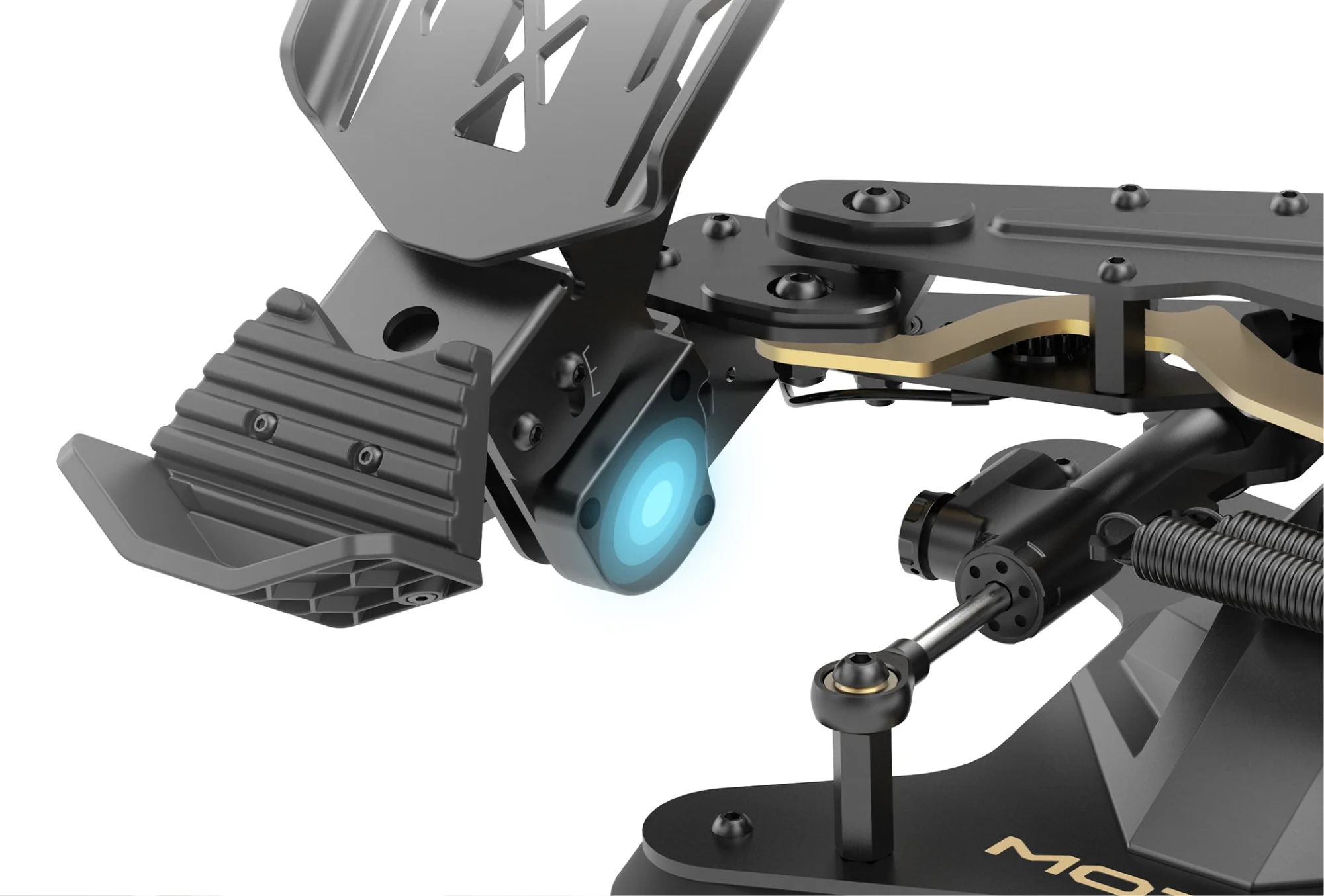
MOZA MRP toe brake assembly with the Hall sensor highlighted
Centring: springs and damper
Return-to-centre force is set by interchangeable springs — softer for relaxed flying, firmer if you want to feel the neutral point clearly. MOZA sells the MRP Adjustable Damper separately: it adds viscosity to the travel and helps match the feel to the aircraft, from a helicopter to a heavy airliner. The damper is not included with the pedals.
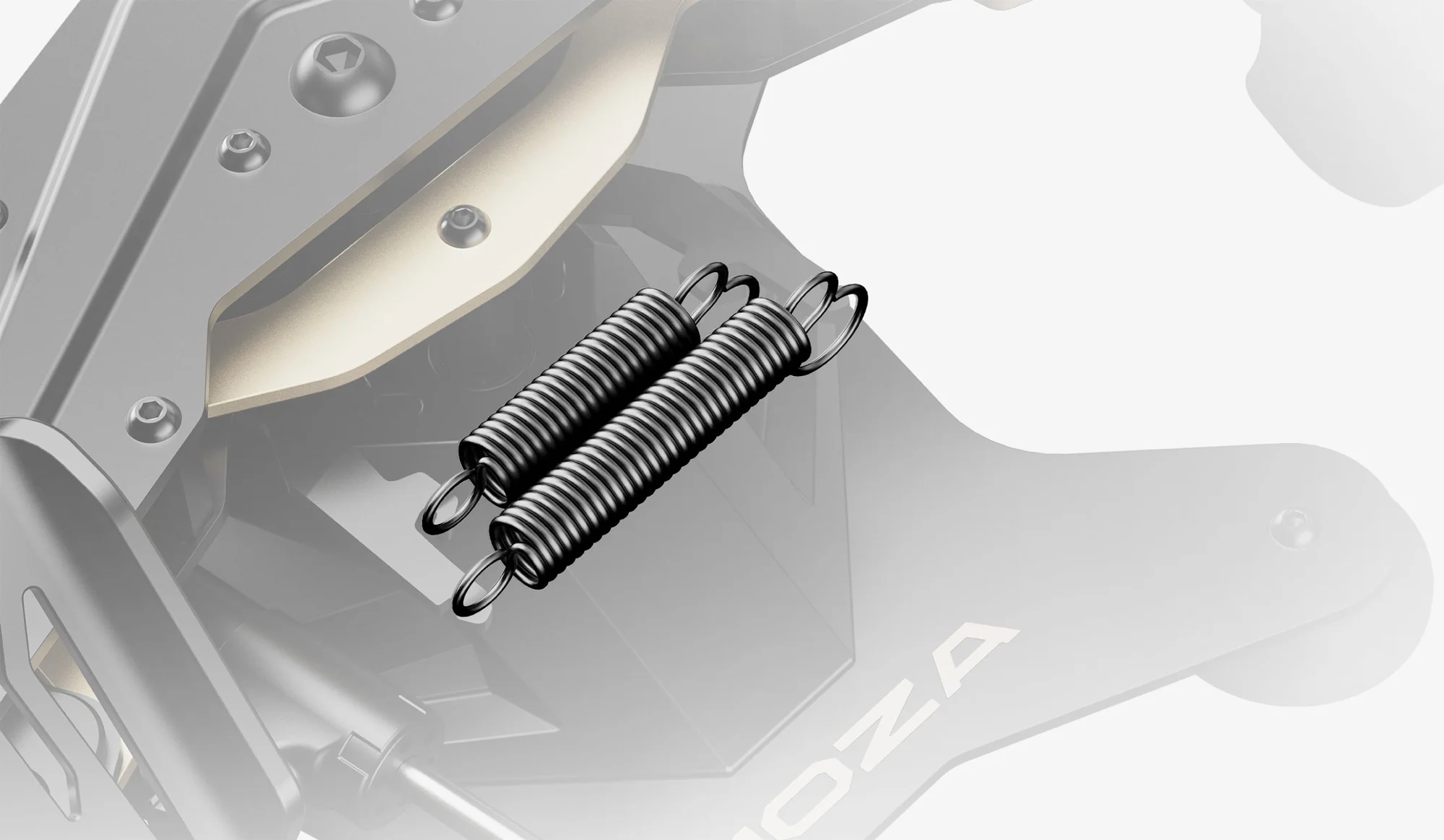
Close-up of the two interchangeable MOZA MRP centring springs
On the floor or in a rig
The pedals connect to MOZA flight bases over RJ11, saving a USB port, or straight to a computer over USB if you have no base. Four rubber pads handle floor use, while profile-compatible holes let you bolt the MRP into a standard aluminium-extrusion rig alongside the rest of your gear.
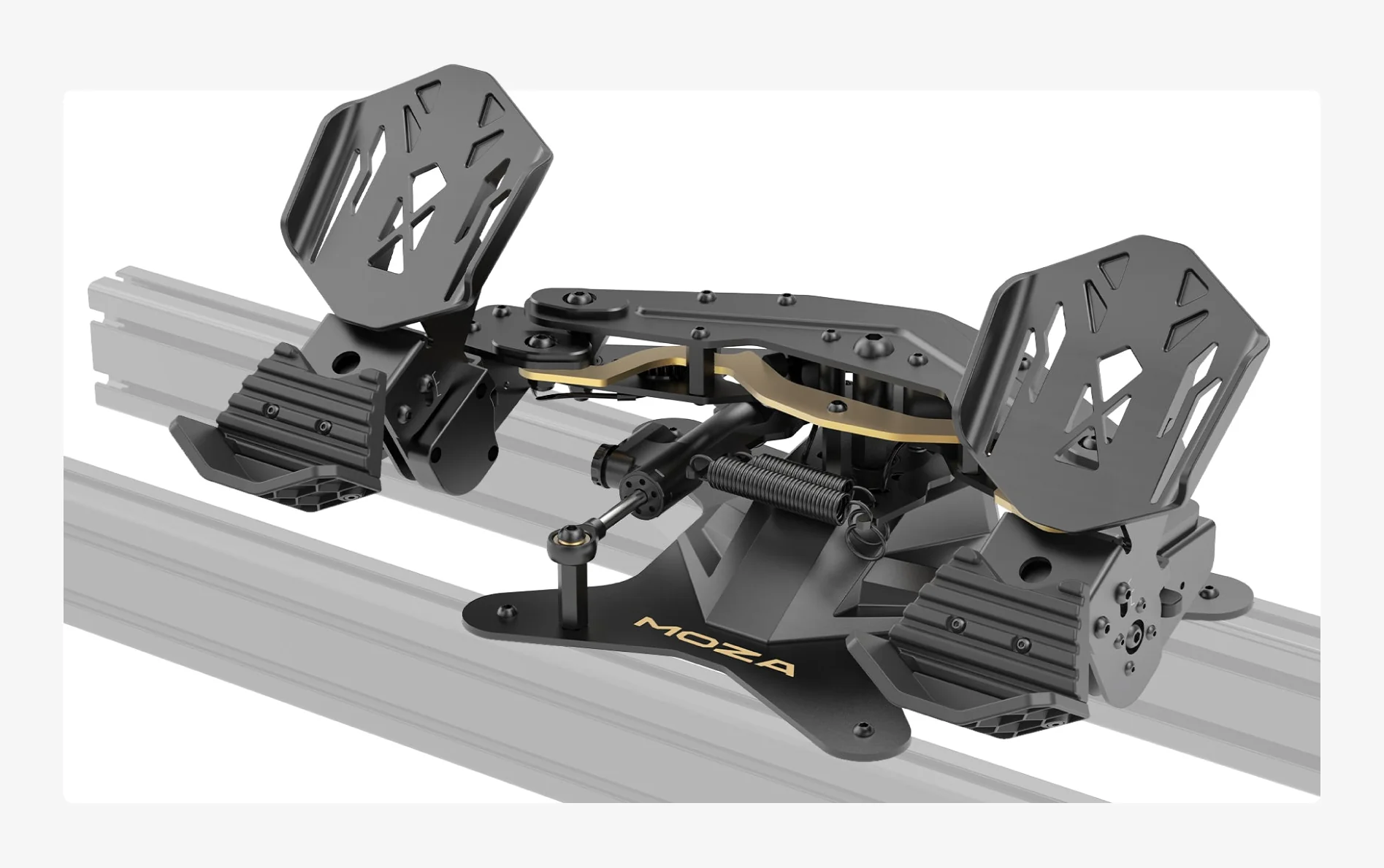
MOZA MRP pedals bolted to an aluminium profile cockpit rail
MOZA MRP Rudder Pedals specifications
Reviews
There are no customer reviews yet. The first review will appear after a verified order.
No reviews yet — be the first to leave one.
Questions and answers
No questions yet. Ask the first one and we will reply within one business day.
No questions yet — be the first to ask.