MOZA SGP Sequential Shifter — sim racing sequential shifter: Hall sensor, 64 mm height range, RGB buttons
Payment methodsAbout this product
All specifications →MOZA SGP Sequential Shifter: description and configuration
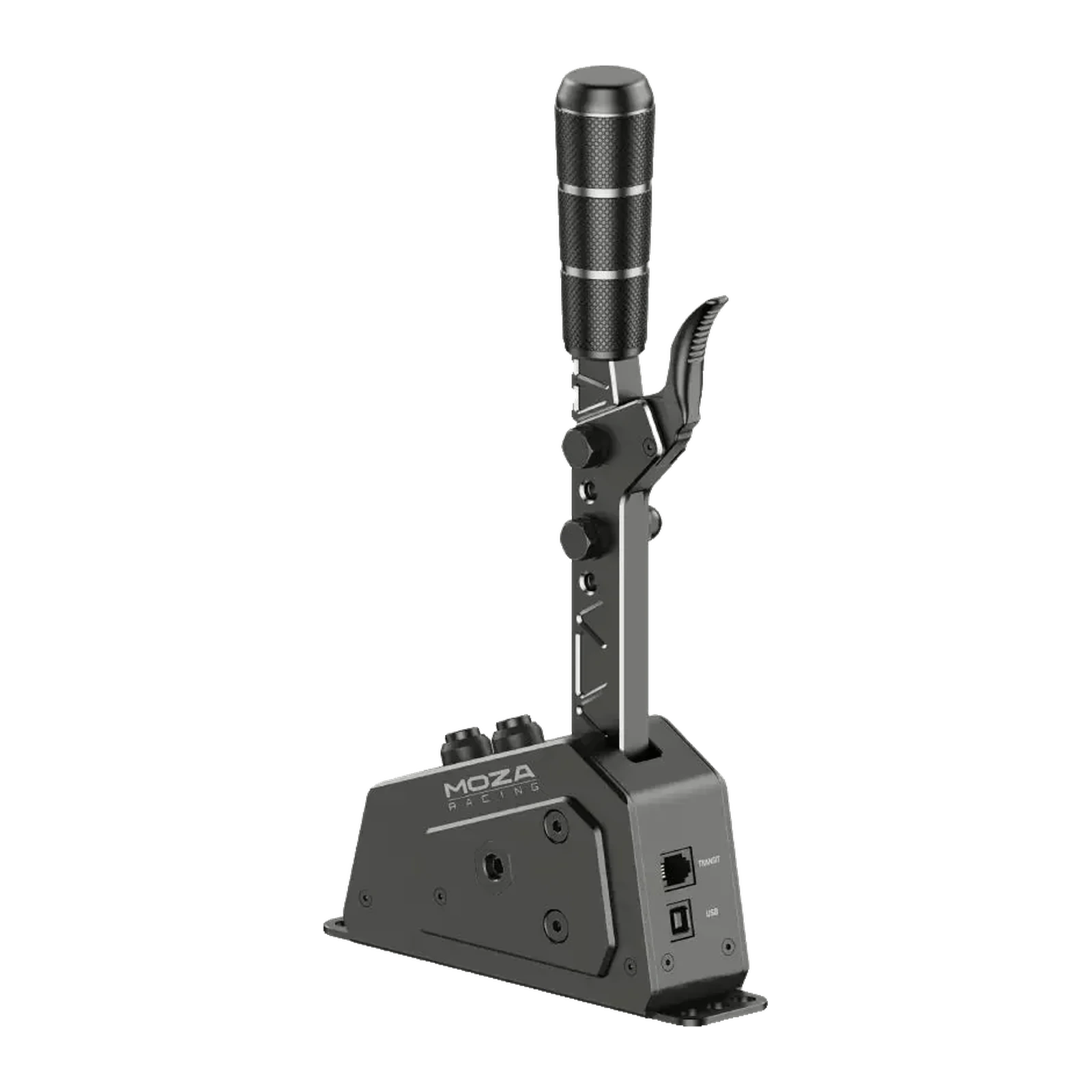
MOZA SGP Sequential Shifter.
The MOZA SGP is a sequential gearbox for sim racing: push the lever up for the next gear, pull it down for the previous one. Rally, touring and formula cars use the same layout, so the SGP fits Assetto Corsa Competizione, DiRT Rally 2.0 and Euro Truck Simulator 2 equally well.
The housing is built from aerospace-grade aluminium alloy and high-strength steel, and the lever and knob are aluminium too. A non-contact Hall sensor reads the lever position — there is no rubbing contact, so precision does not drift over time. Shift resistance is set with an adjustable damper, lever height moves within a 64 mm range, and the M12 × 1.5 knob thread accepts almost any automotive shift knob.
Connection is direct: a USB cable to the PC or the shifter port on a compatible MOZA base, with no adapters. Button lighting, function mapping and sensitivity are configured in MOZA Pit House. The standard mounting options are an aluminium profile rig or a cockpit, in forward or reverse orientation; for a plain desk you also need the MOZA Universal Mounting Plate and a clamp, sold separately.
One pull, one gear
The sequential layout works like a rally or touring car: up for the next gear, down for the previous one, with no gate to find. Your hand stays in one place and a shift takes a fraction of a second, so your rhythm through fast corners is not interrupted. In ETS2 and other sims with many gears, a sequential lever saves noticeably more movement than an H-pattern gate.
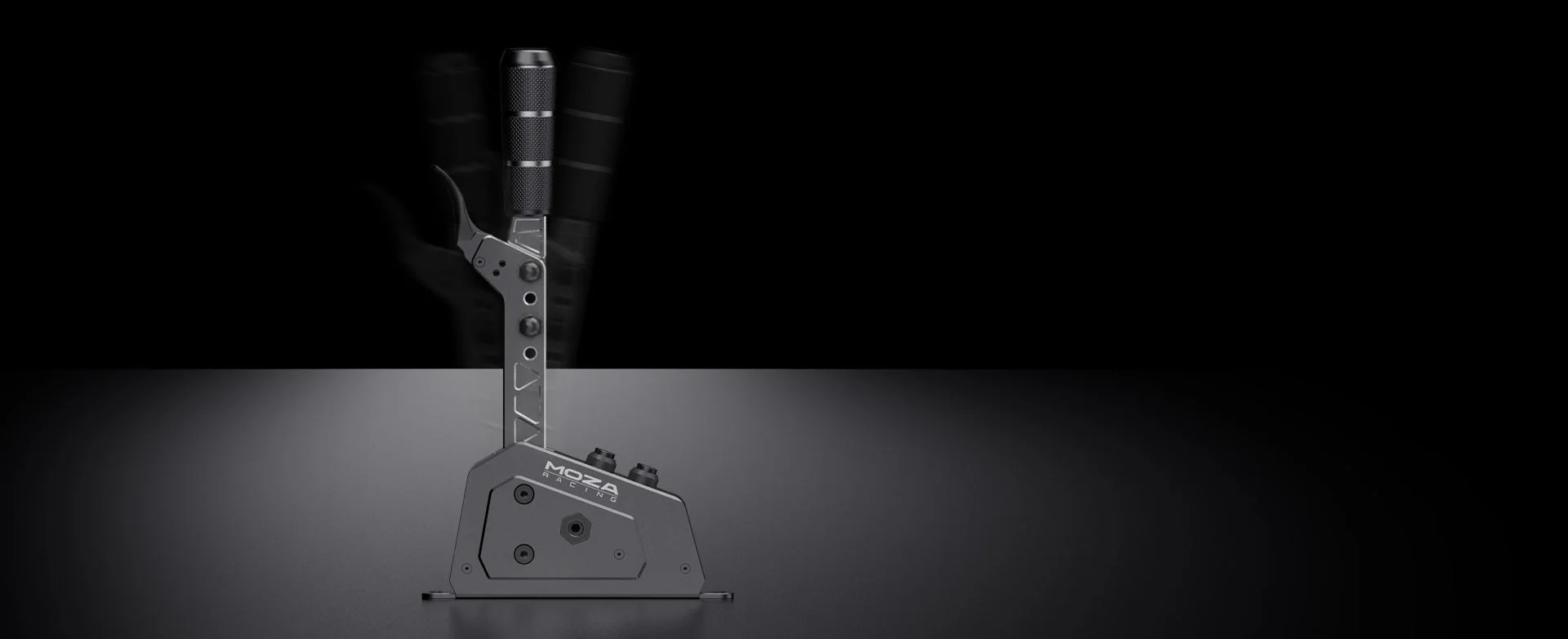
MOZA SGP on a dark background mid-shift, the lever blurred to show a fast gear change
Metal, not plastic
The housing, lever and knob are made from aerospace-grade aluminium alloy and high-strength steel, machined on CNC equipment. You feel the weight and rigidity immediately: the lever does not flex in your hand and the unit does not shift on its mount during a hard change. Underneath the unit there is a mounting flange with a row of holes: it bolts down to a profile rig or cockpit rather than just standing on a desk.

Close-up of the MOZA SGP housing on a dark background: CNC-machined aluminium, the MOZA logo and two buttons
A Hall sensor instead of contacts
A non-contact Hall sensor registers each gear: there is simply no mechanical contact in the circuit to wear out over millions of shifts. For a shifter that is the key durability figure — ordinary microswitches eventually start to miss inputs or bounce. MOZA states that the mechanism passed millions of test cycles with no issues in its structure or electronics.
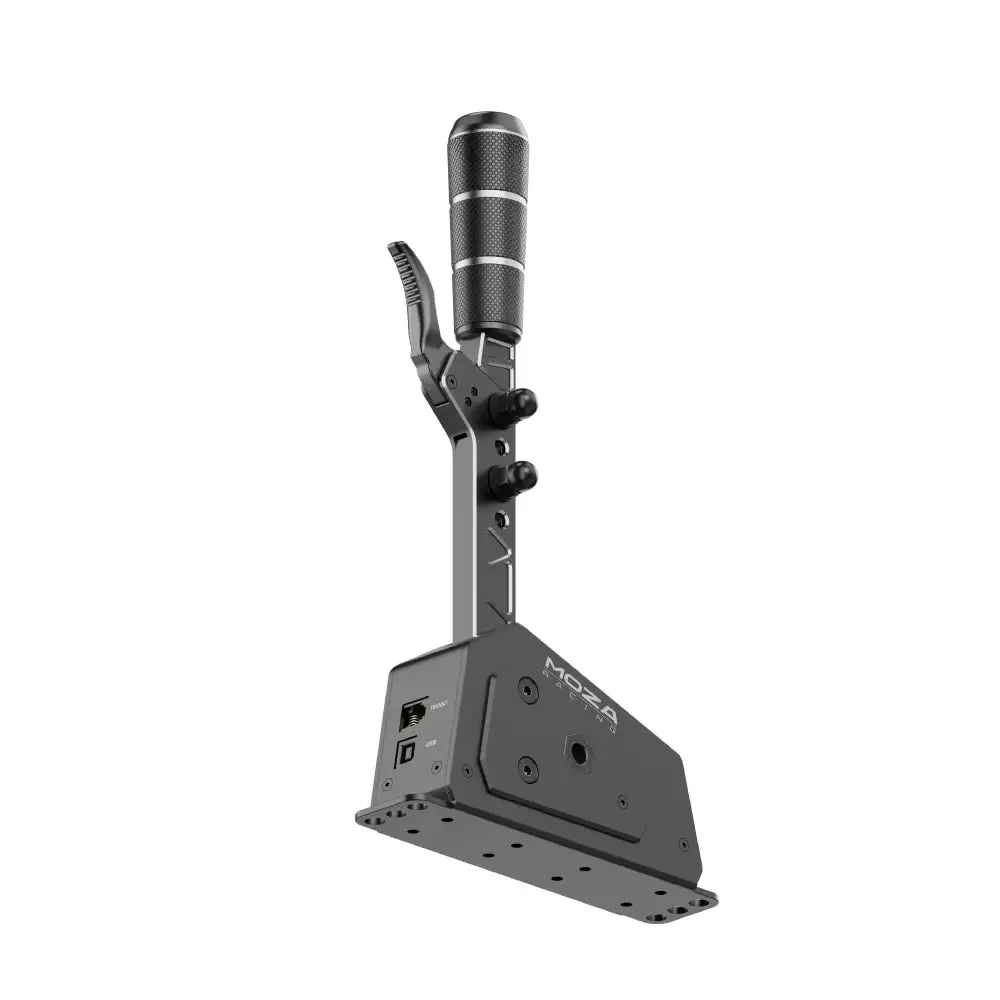
MOZA SGP from the rear and below: the mounting flange with its row of fixing holes and the RJ11 and USB sockets
Adjusts to your hand
Lever height moves within a 64 mm range, so the shifter sits just as well next to the wheel on a profile rig as it does below seat level in a cockpit. Shift resistance is set with the damper, from a light short throw to a firm, race-car feel. The knob unscrews and takes any automotive M12 × 1.5 head — from a classic ball to a long rally handle.
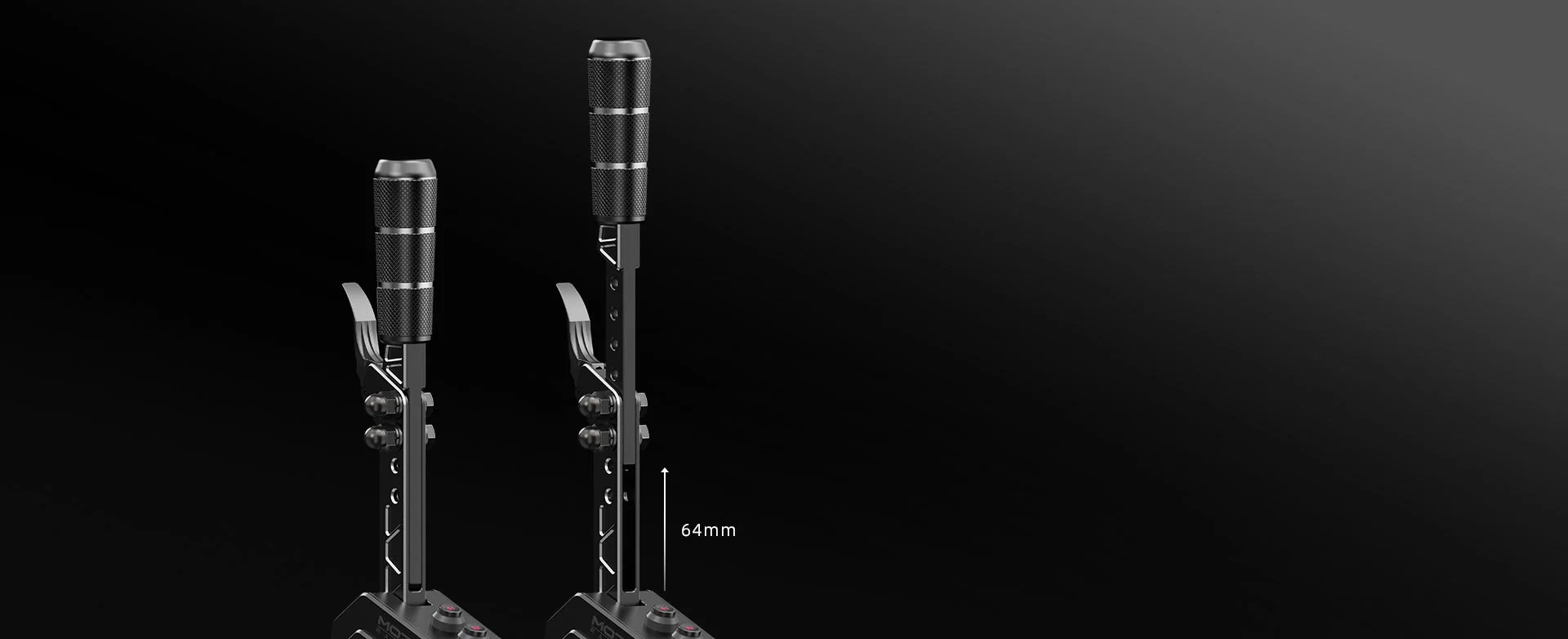
Two MOZA SGP shifters side by side showing the 64 mm lever height adjustment range
Two buttons and no adapters
The body carries two mechanical buttons with RGB backlighting (eight colours to choose from), and the handle has a trigger for neutral, reverse or any function you assign. Everything is mapped in MOZA Pit House along with lighting and sensitivity. Connection is a USB cable straight to the PC or RJ11 into the shifter port on a MOZA base, which keeps a USB port on the computer free.
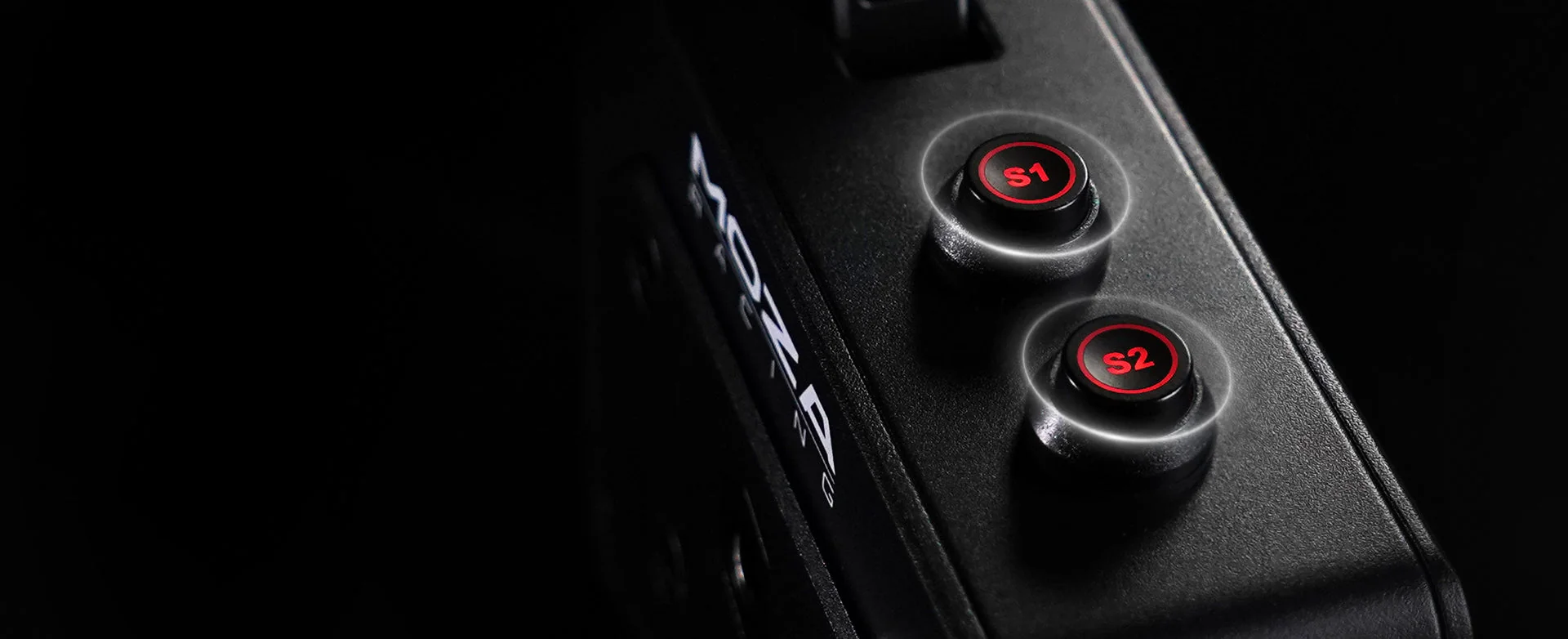
The two S1 and S2 mechanical buttons on the MOZA SGP body lit in red RGB, close-up
MOZA SGP Sequential Shifter specifications
Reviews
There are no customer reviews yet. The first review will appear after a verified order.
No reviews yet — be the first to leave one.
Questions and answers
No questions yet. Ask the first one and we will reply within one business day.
No questions yet — be the first to ask.